
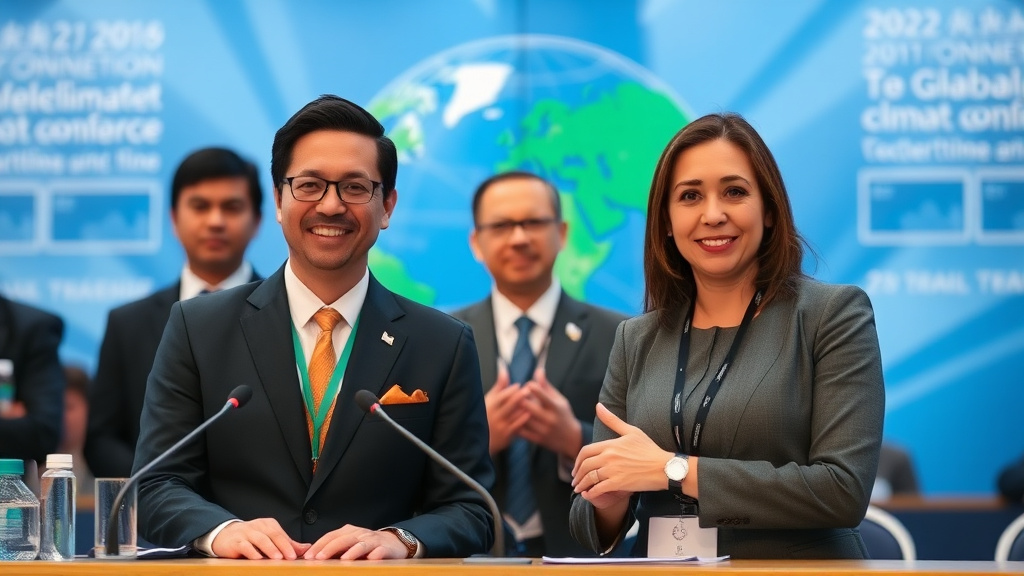
As severe climate events intensify and worldwide temperatures keep climbing, international leaders gather at the current climate conference to address an unparalleled ecological emergency. This critical gathering brings together countries dedicated to establishing firm commitments on carbon pollution, clean energy shifts, and environmental adjustment plans. The importance is at an all-time peak as delegates negotiate frameworks that will shape our planet’s future. Discover how global partnership and ambitious pledges are transforming worldwide efforts to environmental warming.
Environmental Emergency Hits Critical Tipping Point
Scientific evidence overwhelmingly demonstrates that our planet has reached a critical juncture in its climate trajectory. Global temperatures have climbed about 1.1 degrees Celsius since pre-industrial times, triggering cascading environmental consequences across all ecosystems. Receding glaciers, rising sea levels, and progressively worse weather patterns serve as clear warnings of the urgency surrounding climate action. The latest climate summit acknowledges these concerning developments and underscores the importance of immediate, decisive intervention to prevent irreversible damage to our planet’s sensitive stability.
The intersection of environmental damage and financial and social strain has produced an unparalleled emergency necessitating worldwide coordinated action. Less developed countries confront disproportionate impacts from global warming despite contributing minimally to prior carbon output, highlighting the need for just burden allocation across countries. The gathering addresses these multifaceted issues by creating structures supporting technology transfer, climate-related funding, and sustainable development initiatives. World leaders recognize that absent fundamental change within this critical decade, humanity risks breaching irreversible tipping points that could fundamentally alter civilization’s trajectory and long-term viability.
Global Partnership and Policy Framework
The global climate conference marks a pivotal moment for creating coordinated global policies that transcend national boundaries. Participating nations recognize that climate change requires joint efforts, compelling countries to align their sustainability benchmarks and carbon reduction goals. Delegates are negotiating comprehensive frameworks that establish accountability mechanisms, guaranteeing each nation meets its commitments. These joint initiatives aim to create enforceable agreements that propel meaningful progress toward global climate stabilization and sustainable development goals.
Effective policy frameworks emerging from the summit emphasize collective accountability while respecting varying economic conditions across nations. The deals taking shape include provisions for monetary assistance to emerging economies, technology transfer initiatives, and capability development initiatives. By establishing clear benchmarks and monitoring systems, the international community improves its capability to track progress and modify plans as needed. This comprehensive approach acknowledges that confronting the climate emergency requires both urgent steps and sustained organizational dedication from all participating nations.
Strategies and Forward-Looking Obligations
Renewable Energy Transition
The summit has driven unprecedented commitments to clean energy growth across participating nations. Countries vowed to boost solar, wind, and hydroelectric capacity by 50% within the next decade, dramatically overhauling global energy infrastructure. These funds constitute a shared initiative to reduce carbon emissions while generating lasting economic benefits. Developed nations allocated major financial support to support emerging economies in their transition, recognizing that global climate action demands fair cooperation and mutual obligation for ecological recovery.
Carbon Cutting Objectives and Accountability
Delegates created binding carbon reduction targets compelling nations to achieve carbon neutrality by 2050, with intermediate milestones in 2030 and 2040. An independent monitoring framework will monitor advancement openly, ensuring accountability across all signatory nations. These legally enforceable commitments embody the most ambitious climate agreement to date, with penalties for non-compliance and incentives for exceeding targets. The framework includes provisions for knowledge sharing and financial support, enabling developing nations to fulfill their commitments while sustaining economic expansion and social development.
Creating Resilience and Adaptation
Beyond emissions cuts, the summit emphasized adaptation approaches for climate resilience for at-risk communities and ecosystems confronting urgent challenges. Financial frameworks were set up to support seaside regions, farming areas, and island nations confronting rising sea levels and changing weather patterns. Investment in green infrastructure, ecosystem restoration, and climate-resilient agriculture will safeguard economic security while reducing future climate-related damage. This comprehensive approach recognizes that addressing climate change requires coordinated efforts on mitigation and adaptation, ensuring no communities are left behind in our shared shift toward ecological sustainability.
