
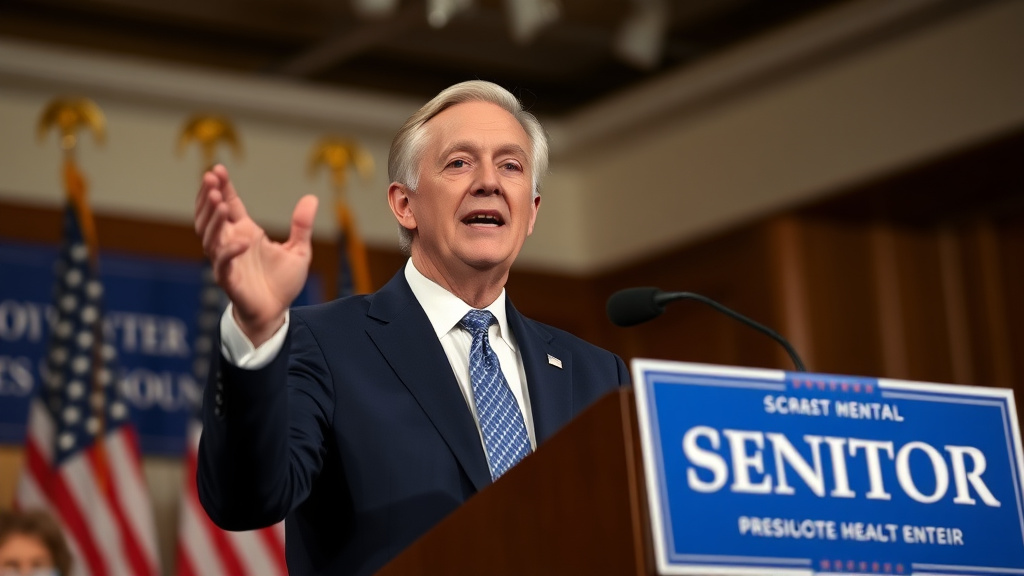
In a notable political announcement, a leading senator has formally announced a campaign for president with health policy reform at its foundation. Amid rising public worry over rising medical costs and insurance accessibility, the candidate has established themselves as a advocate for transformative health policy changes. This announcement marks a critical juncture in the next election cycle, as medical reform becomes a defining issue. The senator’s comprehensive platform promises to address systemic inefficiencies and expand coverage for millions of Americans.
Campaign Vision and Health Policy Focus
The senator’s platform strategy prioritizes establishing a more equitable and accessible healthcare system for all Americans. Acknowledging that medical expenses remain a leading cause of financial hardship, the candidate proposes extensive improvements to lower expenses while improving quality care. The platform highlights disease prevention, mental health services, and drug price controls. By addressing root causes of healthcare inflation, the senator aims to ensure that no American undergoes financial collapse due to medical emergencies or ongoing disease management.
Key healthcare objectives include extending Medicaid access to marginalized populations and reinforcing protections for individuals with existing conditions. The campaign promotes more resources to rural healthcare facilities and telehealth infrastructure growth. Additionally, the senator supports funding healthcare research and professional development to tackle physician shortages. These initiatives reflect a commitment to building a sustainable healthcare system that serves diverse communities and adapts to changing public health challenges confronting the nation.
Important Health Policy Changes
The senator’s campaign focuses on broad healthcare overhaul aimed at resolving structural inefficiencies and expand access throughout the country. These proposals aim to lower out-of-pocket costs while preserving quality care standards. By prioritizing preventive care and efficient administrative processes, the candidate works to build a more sustainable healthcare system. The reform platform demonstrates thorough research and collaboration with physicians and medical experts, patient organizations, and policy experts across the nation.
Comprehensive Coverage Model
The comprehensive healthcare framework represents the cornerstone of the legislator’s health reform proposal. This comprehensive approach aims to guarantee healthcare coverage for all Americans irrespective of employment status or prior medical history. The framework emphasizes equity in care distribution and elimination of coverage gaps that present challenges for vulnerable populations. By establishing baseline coverage standards, the proposal aims to decrease urgent care utilization and improve overall public health outcomes significantly.
Establishing this framework necessitates substantial federal investment and overhaul of existing insurance markets. The senator outlines a gradual implementation starting with growth of Medicaid programs in areas with limited access. Government-private sector collaborations would support changeover phases for current insurance providers. The plan includes tax breaks for employers sustaining supplemental coverage options. Robust data monitoring frameworks would measure advancement and allow real-time adjustments to support program success and sustainability.
- Extend Medicaid coverage to all eligible low-income individuals across the nation
- Create national minimum coverage requirements for core health services
- Develop regional health cooperatives to improve affordability and competition
- Introduce sliding-scale premium structures tied to family income
- Develop integrated electronic health records throughout all healthcare providers
Financial Effects and Deployment Plan
The senator’s healthcare reform proposal carries significant economic implications for both federal budgets and private sector activities. Analysts project that comprehensive coverage expansion could generate significant long-term savings through preventive care services and fewer emergency department visits. However, putting it into practice demands substantial initial investment in infrastructure, technology, and employee training. The campaign stresses that these initial expenses represent essential infrastructure improvements that will ultimately lower total healthcare spending and strengthen economic productivity across all demographic segments.
The implementation strategy emphasizes a staged rollout, beginning with pilot programs in underserved communities before national expansion. The senator advocates for coordinated collaboration between public agencies, healthcare organizations, and insurance firms to facilitate a smooth transition and reduce market disruption. Primary initiatives feature efficient administrative workflows, digital healthcare system upgrades, and incentive programs for rural healthcare providers. This methodical framework is designed to align ambitious reform goals with practical economic considerations, ensuring long-term healthcare transformation.
Campaign Momentum and Public Response
The senator’s campaign announcement has sparked substantial momentum throughout multiple demographics and territorial areas. Initial poll results indicates robust backing among voters focusing on healthcare accessibility and affordability. Media coverage has been extensive, with major news outlets highlighting the candidate’s healthcare proposals prominently. Grassroots organizing efforts have mobilized volunteers nationwide, establishing campaign offices in crucial early-voting states. The excitement around this campaign demonstrates common discontent with the existing health system and push for substantive change.
Public response has been notably positive, particularly among young voters and those with restricted insurance access. Town halls and campaign events have pulled in large audiences eager to interact with the senator’s vision. Social media analytics show significant online support, with messages about healthcare reform gaining broad appeal. Opposition groups have also activated, creating conditions for substantive policy debates throughout the campaign. This active response underscores healthcare’s importance as a major election issue.
